THCA Diamonds and Flavor: Understanding Terpenes and Aroma Profiles
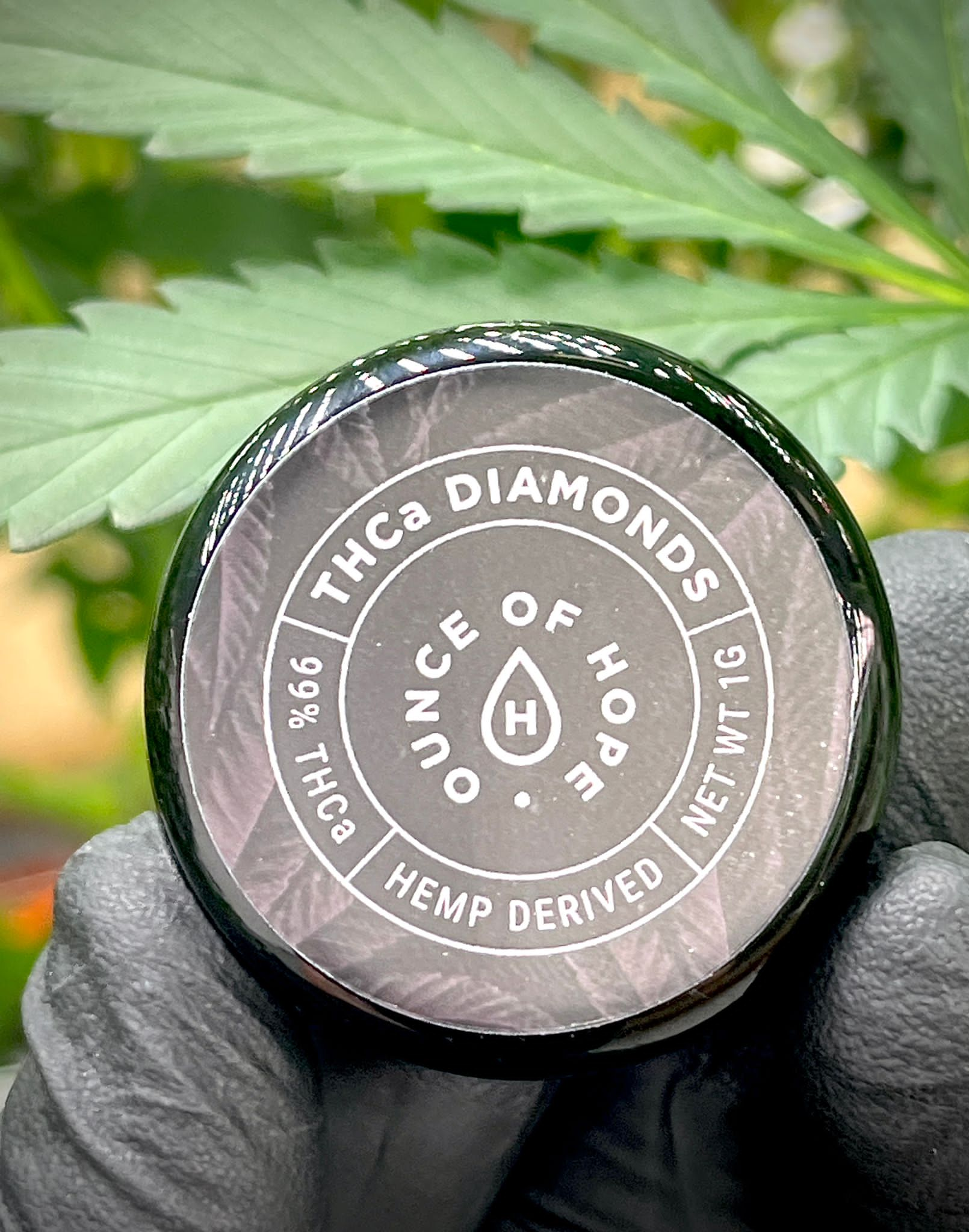
“Diamonds” sounds like something you’d buy for looks, but in the cannabis world it usually means you’re chasing a very particular kind of experience. thca diamonds are largely built from purified THCA crystals, and that concentration is part of the appeal. The trade-off is that when most of the plant material gets stripped away, you can lose the natural terpene complexity that gives flower its smell in the first place.
That’s where the conversation about flavor gets interesting. With diamonds thca, what people taste and smell depends less on the crystals themselves and more on what’s paired with them, how they’re handled, and how you deliver them to heat. If you’ve ever had a jar of diamonds that looked perfect but smelled muted, or a batch that hit with loud citrus or gas, you already understand the core idea: terpenes are the difference between “THCA on a technical level” and thca diamonds nearby “a real aroma profile you can notice before the first hit.”
Below is how I think about flavor and aroma with diamonds, the practical variables that move the needle, and what to look for when you’re deciding among thca diamonds for sale, thca diamonds near me, or thca diamonds for sale online.
What diamonds are doing (and what they are not)
THCA diamonds are, in plain terms, a highly concentrated fraction of THCA. THCA is not the same thing as THC, but it converts to THC with heat. In most diamond products, the goal is purity and potency. That’s why the crystals can look glassy or snow-white, depending on how they were produced and processed.
Terpenes, on the other hand, are a volatile family of aromatic compounds. Many terpenes are present in raw plant material in small amounts, but they’re what your nose reads as pine, diesel, berry, mango, pepper, and so on. When extraction and purification are pushed toward crystallization, terpenes may be removed, diluted, or left in only trace amounts unless the producer builds them back in.
So if you’re expecting “flower-like” aroma straight from a jar of dry diamonds, that expectation can be mismatched. In practice, the most satisfying diamond experiences are the ones where terpenes are intentionally preserved or added back, often as a terpene-rich oil sometimes called “terp sauce” or, in product formats, something marketed as thca liquid diamonds.
Terpenes and aroma: why your nose reacts first
Terpenes don’t just affect flavor in the mouth, they change what you perceive before any vapor touches your tongue. That matters because your brain prioritizes smell cues. When someone describes diamonds as tasting “earthy” or “sharp,” they’re often reacting to a dominant terpene family that shows up at the temperature where the product actually releases aroma.
A few broad, practical observations that hold up across many real-world experiences:
- If the aroma is loud when you open the container, those terpenes are likely present and relatively intact.
- If it smells faint but tastes stronger than expected, you may be dealing with terpenes that release at the specific heating conditions you used.
- If it tastes pleasant at first but turns flat quickly, the profile may not be fully integrated, or the session temperature may be drifting into a range where aromatics burn off more readily.
You don’t need to memorize chemistry to pick up what’s happening. Your senses, plus a little method, tell the story.
The pairing effect: diamonds + terpene carriers
Most “diamond flavor” experiences come from the combination, not from the crystals alone. The key is the terpene carrier.
Some products keep a thicker layer of terpene-rich material around the crystals, so the aroma rides along every time you scoop. Others are engineered as a more liquid format, like thca liquid diamonds, where the crystals are mixed in a terpene-forward oil phase. That can make flavor more consistent across the session because you don’t have to rely on whatever terpene layer happens to be on top.
In my experience, the biggest differences come down to three things:
- How integrated the terpenes are (even distribution versus a top layer).
- How fresh the terpenes are (terpenes can fade over time, especially with heat and light).
- How the product is packaged and stored (airtight matters more than people expect).
If you’ve shopped for best thca diamonds, you may have noticed that the “best” ones aren’t always the most potent on paper. They’re often the ones that still smell alive, not just the ones that look like perfect shards.
Temperature is the hidden flavor knob
Diamonds often get consumed in devices designed for concentrates: vaporizer pens, concentrates rigs, or combination units. The biggest practical lever for aroma is temperature and heat exposure time. Terpenes have different boiling and vaporization behaviors, and the hotter you push, the more you risk shifting from “bright aroma” to “cooked” or “muted” notes.
Here’s how this plays out in everyday use:
- At lower to moderate temperatures, you typically get more of the top notes: citrus, pine, sweet fruit, floral, or that clean “gas” edge people talk about.
- At higher temperatures, the profile often shifts to heavier, less nuanced notes. Some people describe this as more “harsh” or less flavorful, even when the potency feels stronger.
- If you overheat a small amount repeatedly, you can end up effectively roasting whatever terpene fraction is present, and then the rest of the crystals deliver more effect with less aroma.
If you’re dialing in a new product, it helps to treat the first few hits like calibration. Tiny changes in settings can create a big perception swing, especially with a terpene-forward item.
Why “raw” aroma can differ from “vape” aroma
A jar can smell amazing and still taste different once heated. That doesn’t necessarily mean the product was bad. It often means your senses are picking up one set of volatiles at room temperature and a slightly different set in vapor form.
Some aromatics read as sweet or fruity cold, but when heated they become more muted or even sharper. Other compounds might be barely noticeable in the container but pop when vaporized. Your device also matters. A vaporizer that cools vapor more effectively can preserve a brighter aroma, while a hot, direct draw can amplify harsher notes.
If you care about flavor, don’t judge purely from packaging scent. Smell the jar, yes, but also pay attention to the second and third hit. That’s where terpene integration and heat management show themselves.
thca diamonds vs thca liquid diamonds: what flavor differences to expect
Even without getting into brand-specific claims, you can understand the typical flavor behavior based on form factor.
thca diamonds (dry or more crystal-heavy products) usually require a bit more technique. If the terpenes are concentrated in a sauce layer, your first scoop matters. If the terpenes are minimal, the flavor can be subtler. The experience can be excellent, but it tends to be more variable depending on how the product is mixed in the jar.
thca liquid diamonds, in contrast, tend to be built for consistent dosing. When crystals are dispersed in a more uniform oil, the terpene fraction is more likely to be evenly delivered across each portion. That can mean a more repeatable aroma profile from hit to hit.
In real-world shopping terms, this is why some people swear by thca liquid diamonds for flavor and others prefer dry crystals for control. The truth is less about which one is inherently better and more about how much you want to manage heat and scooping behavior.
Aroma profiles you might recognize, and why they shift
People usually describe diamond aroma in shorthand: “diesel,” “lemon,” “berry,” “earth,” “skunky,” “spice,” “tropical.” Those descriptors correspond to terpene patterns, but your exact perception depends on the full mixture, which can change between batches.
Two situations commonly make flavor profiles seem inconsistent:
- Batch-to-batch variation in terpene blends. Even when a brand targets the same strain-like profile, the terpene ratios can shift.
- Terpene fade during storage. Light and warmth degrade many aromatic compounds. A product that smelled strong on day one can smell quieter a month later, especially if it’s been exposed during shipping or frequent opening.
If you’re comparing thca diamonds for sale online listings, pay attention to storage language and how the product is packaged, not only what the description says. The most convincing “best thca diamonds” marketing is the one that aligns with the reality of what you smell when you receive it.
What to look for when shopping for diamonds for flavor
Shopping for flavor is tricky because labels can be vague. “Terpene-rich,” “live,” “strain-inspired,” “sauce,” “infused,” and similar phrases can mean different things. Still, there are practical cues you can use without guessing.
When I’m deciding between thca diamonds for sale, thca diamonds near me, or an online option, I focus on these signals:
- Jar smell on arrival. If it’s faint and dull, you probably won’t magically get a bright profile later.
- Clarity and uniformity. Dry crystals are typically visually distinct, but terpene-heavy products often look more layered or slightly glossy. That layering can be good for aroma, but it can also mean terpenes concentrate at the top.
- Packaging quality. Opaque jars, good seals, and minimal airspace help preserve aromatics.
- How the product is described in relation to terpenes. If the listing makes it clear that terpenes are intentionally part of the experience, it’s more likely you’ll get the aroma you want.
If you’re searching for thca diamonds for sale online, it’s also worth being honest about your priorities. If you want the brightest flavor possible, you may have better luck choosing products marketed as terpene-forward or mixed forms, rather than purely “pure crystal” listings.
A practical way to evaluate flavor at home (without wasting product)
If you want to know whether a diamond purchase will deliver the aroma you’re after, you can do a quick evaluation. It doesn’t have to be complicated, and it saves money when you’re trying something new.
Use a consistent setup. Same device, same temperature range, and roughly the same amount each time.
Here is a simple approach:
- Smell the jar immediately after opening, then again after a few minutes. If it changes quickly, you may be dealing with more volatile top notes that dissipate fast.
- Take one small test hit at your usual temperature, then one slightly lower or higher if your device supports easy adjustments.
- Pay attention to the second hit. The first hit can be dominated by whatever terpene fraction is closest to the surface.
- If the first two hits are good but the session turns flat, your heat settings may be pushing aromatics too far.
- If the smell is strong in the jar but flavor is muted in vapor, reassess your device airflow and temperature.
That’s the whole point. You’re not chasing perfection on hit one, you’re mapping how the product behaves in heat.
Storage and handling, the boring stuff that changes everything
Diamonds can stay stable in some formats, but terpenes are not as forgiving. If you’re serious about aroma, storage becomes part of the buying decision.
Light matters. Heat matters. Repeated exposure to air matters. I’ve seen plenty of products that arrive smelling great and then lose character after long storage in a place that’s warmer than it should be, or after repeated openings without wiping and re-sealing.
A couple practical habits make a noticeable difference:
- Keep the product in a cool, dark spot.
- Open it briefly and re-seal promptly.
- Avoid leaving jars open on a counter while you get ready.
- If your storage environment tends to be dry and cold, let the jar come to room temperature before you handle it. Condensation can be a problem with some concentrates, and even when it doesn’t “ruin” anything, it can make handling messier and more inconsistent.
You don’t have to treat it like a lab sample, but treating it like something with delicate aromatics will pay off.
Troubleshooting: why your diamonds taste bland or harsh
Sometimes the issue is the product. Sometimes it’s the technique. And sometimes it’s both. If you’re not getting the aroma you expected from diamonds thca, here are the most common causes I’ve seen, and what you can do.
- Harsh or burnt taste: lower your temperature or reduce heat duration. Let the device cool between pulls.
- No flavor but good effect: the terpene fraction may be low. Try a more terpene-forward format like thca liquid diamonds, or check whether the product has a sauce layer.
- Good first hit, then flat: terpenes are likely being cooked off quickly. Use shorter sessions and smaller amounts.
- Inconsistent flavor across hits: the terpenes may be unevenly distributed in the jar. Mix gently if the product format allows it, or scoop from different parts.
- Jar smell was strong but vapor is muted: device airflow or temperature may not be optimizing release of those aromatics. Adjust settings and retest.
This kind of troubleshooting is especially relevant if you’re comparing best thca diamonds from different sellers. The “best” batch for smell can still taste different depending on your heating behavior.
Where “strain-like” flavor fits in
A lot of products are described with strain names or strain-like profiles. I treat that as a directional hint, not a guarantee. Even when a terpene profile is designed to mimic a familiar strain, it still depends on the actual terpene blend used and how it’s preserved.
That said, strain-like naming can still be useful. If you know you like a particular style, for example something that tends toward sweet citrus or something that leans more gassy and peppery, the labeling helps narrow your choices. Just don’t assume the aroma will match your favorite flower perfectly. Diamonds and flower start from different material, and the extraction pathway changes what makes it through.
If you’re browsing thca diamonds for sale online, you’ll often see a long list of profile claims. I’d prioritize the ones that emphasize terpenes, freshness, and terpene integration over the ones that only focus on potency.
What makes a diamond purchase “worth it” for flavor
Flavor is easy to hype and hard to measure, but you can evaluate value by how repeatable the aroma is in your own routine.
A few honest questions I use:
- Do I like the smell enough to enjoy it before the first hit?
- Does it taste like something specific, or does it just taste “concentrate-like”?
- Can I get a consistent profile across several sessions, or does it fade after a couple uses?
- Does the product behave well at my usual settings, or does it require constant tuning?
If the answer is mostly “yes,” it’s probably a good flavor-oriented purchase, even if it’s not the absolute top price.
Final thoughts: chasing aroma is really chasing integration
THCA diamonds can be a powerful experience, but flavor is a different kind of power. It comes from terpenes, and terpenes are influenced by packaging, storage, formulation, and heat. That’s why two people can try the same general “diamonds THCA” type product and report very different aroma profiles.
If you want bright, recognizable flavor, lean into terpene-forward formulations. Consider thca liquid diamonds when consistency matters, and don’t be afraid to adjust temperature if your device tends to run hot. If you’re searching thca diamonds near me, smell the jar if you can. If you’re choosing thca diamonds for sale online, look for credible storage and terpene integration cues, then do a small test before you commit to a full run.
The best part is that once you understand the variables, diamond flavor becomes predictable in your own setup. The aroma stops being a surprise, and starts becoming something you can dial in.